

The cloud is a powerful tool that improves efficiency, scalability, and flexibility for businesses – but along with these benefits come significant costs. If left unchecked, these expenses can quickly outweigh the advantages provided. This issue is only worsened by rising prices, making careful budgeting crucial.
But there is a solution. Cloud cost optimization strategies allow businesses to manage expenses effectively, enjoying the benefits without worrying about whether budgetary needs are being met. The money saved can even lead to higher profits over time, making this a vital strategy for long-term success.
Migrating to the cloud? Discover how an expert consultant can help
Why Cloud Cost Optimization Techniques are Essential
In addition to natural increases over time, businesses will experience higher cloud costs as they grow. This happens because of the pricing structure cloud service providers (CSPs) use – operating on a pay-as-you-go model, they charge only for the resources actively being used. Higher usage means higher prices. Without careful management, this can lead to budget overruns and unused resources.
Some common reasons for excessive cloud costs include:
- Unused resources: Overestimating needs and paying for more than is necessary.
- Low Visibility: Difficulty tracking costs across departments or cloud environments.
- Complexity: Inability to manage multiple cloud services at once efficiently.
To combat these issues, businesses must adopt cloud cost optimization strategies that ensure all expenses provide real value and contribute to overall goals.
Cloud Cost Optimization Best Practices
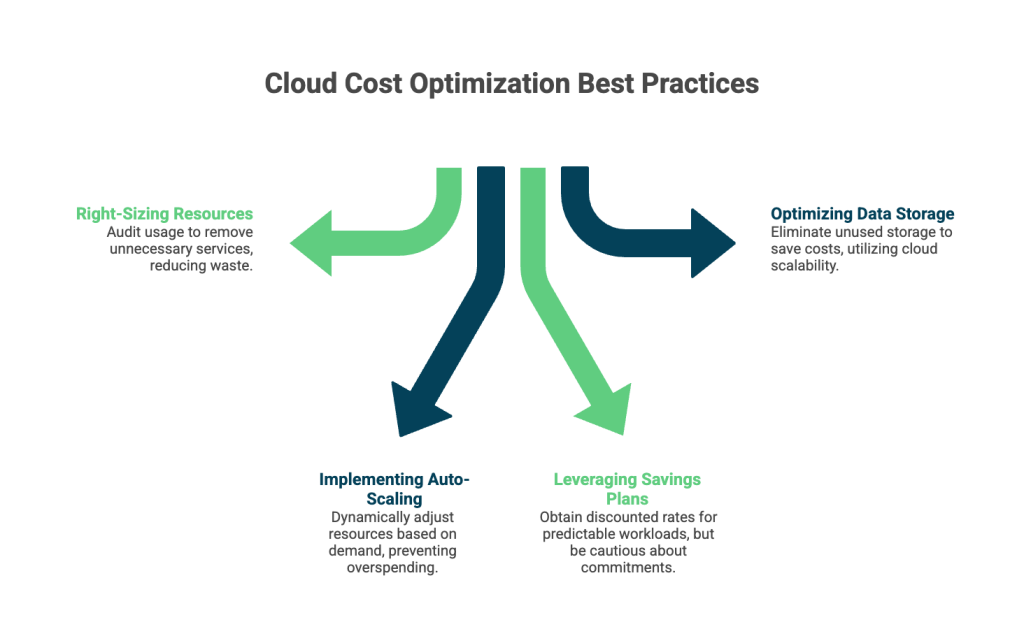
The right strategies can significantly reduce resource waste while maintaining performance. Here are some to consider:
Right-Sizing Resources
Many businesses simply aren’t aware of how many cloud resources they actually use. Perform an audit to evaluate current and projected future usage, then remove any unnecessary services.
Implementing Auto-Scaling
Some cloud services such as AWS, provide auto-scaling. This is when they dynamically adjust resource allocation based on the business’ perceived demand. Using this option, when offered, can help prevent overspending and save money.
Leveraging Savings Plans
If workloads are relatively predictable, savings plans offer discounted rates compared to on-demand pricing. However, these may require the business to commit to a certain usage level for a period of time – so be cautious. This strategy can be particularly effective for AWS cloud cost optimization, as they offer many options.
Optimizing Data Storage and Transfer Costs
Many companies fall into the trap of hoarding more storage than they need, using the rationale that they may need it in the future. However, the cloud’s natural scalability makes this entirely unnecessary. Evaluate current storage and eliminate any that is sitting unused.
The Challenge of the Multi-Cloud: Cost Optimization Techniques for More Complex Environments
A multi-cloud environment significantly complicates the issue of cost optimization. Unfortunately, businesses using this structure are also among those most likely to be overpaying. Here are some strategies that can help address multi-cloud specific issues:
Centralized Cost Management
Keeping all cost management in one location, and as one person’s responsibility, will make it easier to see how much is being spent across the board. This visibility enables better decision-making.
Workload Portability
Flexibility is one of the most important benefits of a multi-cloud approach. By fully leaning into this advantage and shifting workloads to the most effective environment at a given time, businesses can reduce unnecessary expenditure.
Negotiating Pricing and Discounts
Businesses using multiple cloud services are in a better position to negotiate their pricing, as their operations do not rely entirely on one provider. Leverage this to lower costs wherever possible.
Standardizing Cloud Policies
If different teams are using their own cloud services, strong governance that enforces the same set of policies for each ensures a consistent approach and lowers unexpected expenses.
Best Cloud Cost Optimization Tools
Businesses may be able to benefit from cloud cost optimization software, to streamline the process and minimize the risk of human error. Some options include:
- AWS Cost Explorer: Creates custom reports that provide insights into spending patterns.
- Google Cloud Cost Management: Offers recommendations for better cost management, including changes to permissions and governance policies.
- Microsoft Cost Management: A suite of FinOps tools designed to analyze and optimize costs associated with Microsoft products, including Azure.
- Spot.io (Spot by NetApp): A third-party cloud cost optimization platform that uses real-time alerts.
Frequently Asked Cloud Cost Questions
How can startups optimize cloud costs?
In some ways, optimizing cloud costs for startups is easier than for well-established companies. This is because they often have yet to fully integrate their services, making them easier to extricate without causing issues. When adopting new cloud services, evaluate them carefully to determine where they fit into the business before committing. Costs should be monitored especially closely during this time, as even a small amount of waste can be highly detrimental.
How often should businesses conduct a cloud cost optimization assessment?
Businesses should perform cloud cost optimization assessments quarterly, to ensure that all services remain cost-effective and adjust strategies as needed. The faster an issue is detected, the less money will be wasted.
Is AWS Cloud Cost Optimization Really Easier?
AWS does provide a wide variety of tools that can help improve cost-efficiency. However, whether or not it is “easier” to optimize will depend on each business’ unique setup and needs. Don’t be too fast to commit to a CSP without investigating the options available.
The cloud is prone to cyber-attacks – learn how to secure yours
Take Charge of Your Cloud Expenses Before They Take Over Your Business
Cost control is essential for all business operations – but especially with variable expenses such as those incurred by cloud services. As operations scale and the company grows, it will be important to monitor for any new inefficiencies and adjust accordingly. This will prevent wasted money from building up over time and impacting other investments, ultimately ensuring higher profits and greater success.
Cloud cost optimization can be tricky, but Ascentient has you covered. Our expert consultants improve your bottom line by finding and addressing your biggest inefficiencies, making sure every dollar brings you closer to your goals. Learn how we can optimize your cloud costs and help you achieve peak performance.